Cool Hikes & Other Things to Do With 2 Days in Joshua Tree National Park
*This post was updated March, 2023
Table of Contents
Getting to Joshua Tree National Park
Two Day Itinerary for Joshua Tree
Where to Stay and Eat Around Joshua Tree
Planning Tips & Things to Know for Visiting Joshua Tree National Park
Getting to Joshua Tree National Park
Two-Day Itinerary for Joshua Tree
Jumbo Rocks | Split Rock Hike (2.5 mile loop) | Hidden Valley Trail (1 mile loop) |
Afternoon Ranger-Led Keys Ranch Tour (90 minutes) | Barker Dam Nature Trail
(1.1 mile loop) | Sunset near the Jumbo Rocks campground
Day Two
Short stop at Skull Rock | Cap Rock (0.4 mile ) | Keys View |
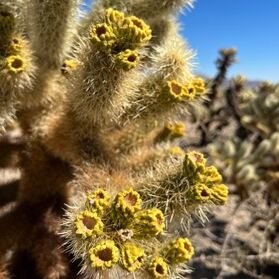
Arch Rock (Heart Rock) (1.4 miles) | Cholla Cactus Garden | Cottonwood Springs (California Fan Palms) view from the overlook or short walk to fan palms
(site of Mastodon Peak and Los Palms Oasis hikes)
If time is limited, driving on Park Boulevard (East-West) from one end to the other will take you past many of the park highlights. Pinto Basin Road (North-South) takes you to the southeastern portion of the park and the Cottonwood Visitor Center. Just know that when the park is busy, parking in some of the lots may be unavailable.
With two days to explore, we got an early start both days to make the most of our time. Plus the morning is always a nice time to take photos. The late February weather was perfect for hiking (sunny and in the 60’s once it warmed up from the early morning chill), although there had been snow the week before. We never felt like the trails were crowded, even though all of the available campgrounds in the park were full.
There was literally no traffic at the north entrance around 8:30 Sunday morning, surprising for a popular national park. Our first stop was the Oasis Visitor Center, where we picked up our Joshua Tree National Park map, sun-hat, stickers, Christmas ornament, and a park book. Since our visit in early 2022, the new Joshua Tree National Park Visitor Center in Twentynine Palms opened and the Oasis Visitor Center has closed. Plan to spend some time in this new space, which includes a museum with rotating exhibits honoring Native American Communities. We have found over the years it’s always worth the time to pick up a paper map, check out the exhibits, and ask any general park questions. While chatting with the ranger about the best sunset spots, we learned that overcrowding had led the park to entirely close the popular sunset parking area at Keys View early in the afternoon. Good to know in advance, as we were considering that spot for sunset. Guess we’ll have to just add that to our list for a return trip!
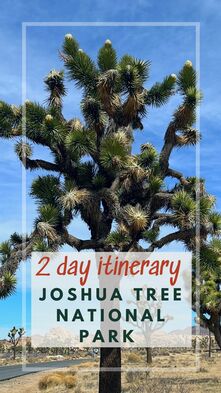
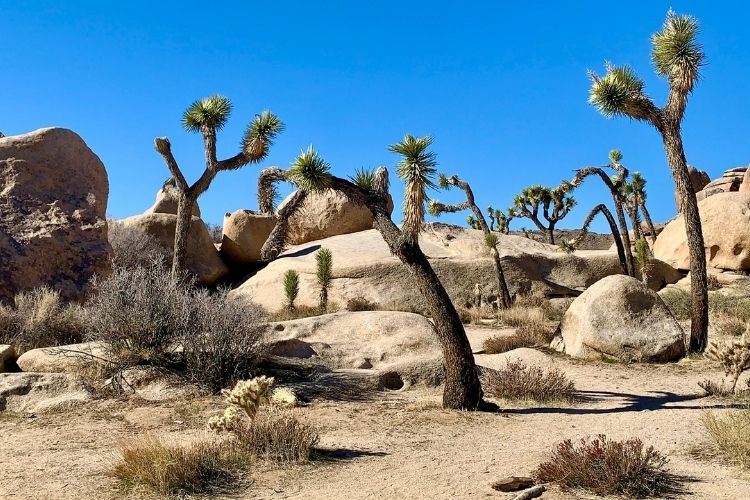
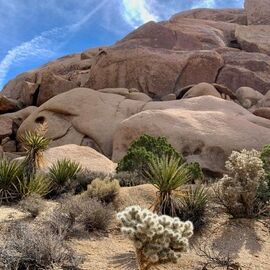
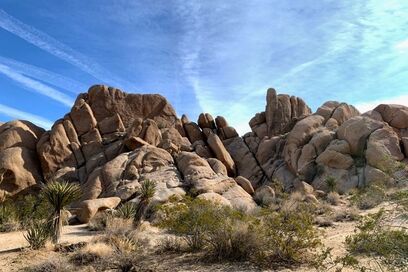
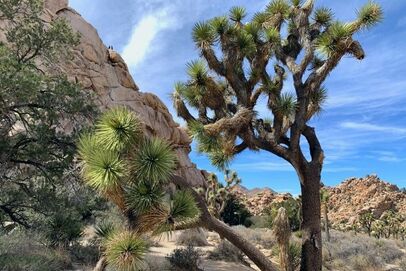
None of us knew quite what to expect in the park other than seeing the cartoon-looking Joshua trees. We were surprised to learn that, in fact Joshua trees (Yucca brevifolia) aren’t really trees at all but rather a member of the Agave family. But it’s not only the iconic Joshua trees that make this park special. Beginning with our first pit stop in the Live Oak and Jumbo Rocks area, we were awed by the granite rock formations, boulders, and geology. On our first hike on the 2.5 mile Split Rock loop trail, we were surrounded by massive boulders, and several new (to us) bird species set against a backdrop of crystal blue skies. A memorable way to start our day!
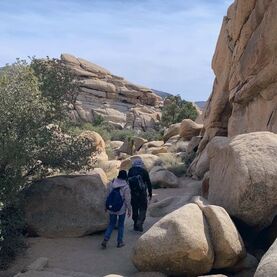
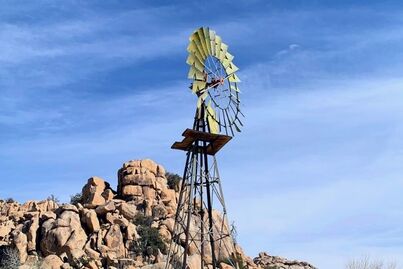
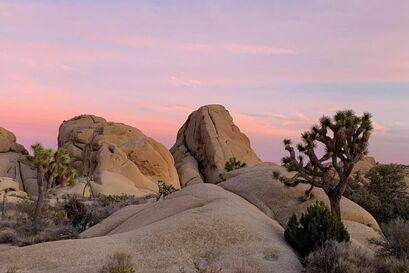
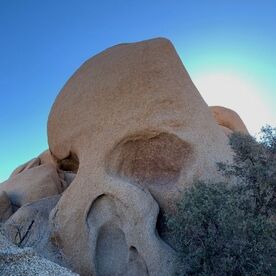
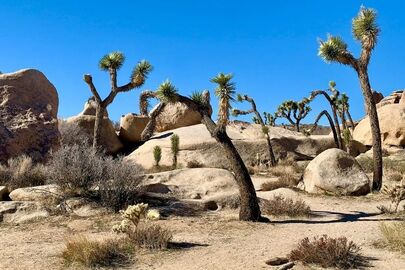
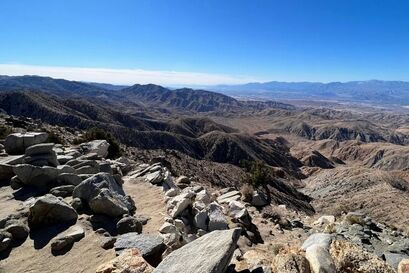
We backtracked to Park Road and then headed south on Pinto Basin Road to reach our last hike to Arch Rock. Start in the Twin Tanks parking lot, and head to the trail. According to the National Park app, the trail looks like a lollipop, but we definitely had a harder time following the trail markings at certain points. The good news is that we stumbled upon Heart Rock, a not-to-be-missed spot for some fun photos. Not far from Heart Rock is Arch Rock. It requires a bit of rock scrambling to get up there, so if this isn’t your thing you can view from afar like I did.
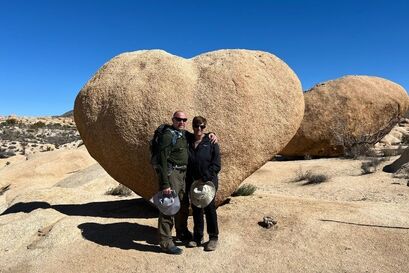
Our last stops of the day were the Cottonwood Visitor Center, and then Cottonwood Springs. The trailhead parking lot was full, with easy access (or just a view from the overlook) to the tall, California fan palms and cottonwood trees found in a spring-fed oasis. There’s a few longer hikes from here that include Mastodon Peak (roughly 3 miles) and Lost Palms Oasis (roughly 7.5 miles roundtrip). Maybe next time! From this point, it was just a short drive to pick up Interstate 10 to head back to the coast!
Where to Stay and Eat Around Joshua Tree
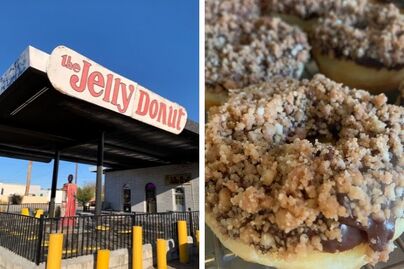
Regarding food, there are no food options in the park so plan accordingly. If you aren’t camping, having a small cooler on hand makes it easy to store lunch and all that extra water you’ll want to have in the car no matter what time of year, but particularly in the warmer months. There are a surprising number of restaurants and small food markets in the gateway towns of Joshua Tree and Twentynine Palms. On our way in the first night, we picked up lunch sandwiches for the next day from the Roadrunner Grab & Go. They offered a nice selection of hearty subs, even when we arrived close to closing time. Other highly rated spots in Joshua Tree include the Natural Sisters Cafe, Pie for the People, and the Country Kitchen (for breakfast and lunch). In Twentynine Palms, we really wanted to try the ribs at The Rib Co, but with an hour wait for take out, we opted for John’s Place for casual, family style food. The filling breakfast at the popular Cactus Cafe gave us fuel for a day of hiking. And while you might be tempted to drive past what looks like a vintage gas station, don’t miss the apple fritters from Jelly Donut. Had I known more about their popular Pho dishes, we would have stopped in for dinner as well. Definitely on our list for a future visit!
Planning Tips & Things to Know for Visiting Joshua Tree National Park
Related:
Ideas and Resources to Plan Your Next National Park Vacation*Figure out ahead of time if you are eligible for a discounted pass for park entry. Consider an America the Beautiful annual pass if you are going to visit several parks with entry fees over the course of a year. Don’t forget about Every Kid Outdoors if you have a 4th grader in the family.
*The busy season is typically October to May due to the cooler weather, since summer temperatures can hover close to 100 degrees. Even in late February, I was glad to have a wide brimmed hat to shield myself from the strong desert sun. Summer visits and hikes are not to be taken lightly. The lack of shade and desert heat can pose serious health threats, and bringing enough drinking water into the park with you is critical.
*If you haven’t already downloaded the National Park app, do it now! I used this as a helpful planning tool to learn about hikes, find visitor center hours, and download maps. But the best feature is the ability to download the park for offline use. This is critical, as service in the park is basically non-existent and having hiking information, maps, etc while in the park is so beneficial. You can always remove the data after your trip if storage space is a concern. Having a paper map on hand is also a good practice (I also take a photo on my phone to keep handy). Stop at one of the visitor centers to pick one up. The app also has maps, and provides details like estimated times for 25 hikes in the park.
*Park Boulevard and Pinto Basin Road are the two main roads that run through the park. There are also roads like Queen Valley Road that are unpaved (but not restricted to 4-wheel drive), along with roads that are restricted to 4-wheel drive and high clearance vehicles only.
*Read the helpful Plan Like a Park Ranger: Top 10 Tips for Visiting Joshua Tree National Park before you go. These tips (especially 5 & 6) can go a long way in having a more enjoyable national park experience.
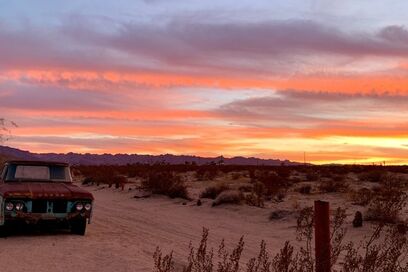
*If you aren’t camping in the park, consider staying in the less crowded Twentynine Palms area rather than Joshua Tree. Our neighborhood was so peaceful and the evening sky was spectacular. You won’t want to miss the 26 murals that share the story and heritage of the town. Next time we will add another day just to explore both towns and some of the quirky nearby attractions like the Noah Purifoy Desert Art Museum and the World Famous Crochet Museum.
PIN FOR LATER