What to Expect When Visiting Great Sand Dunes National Park & Preserve
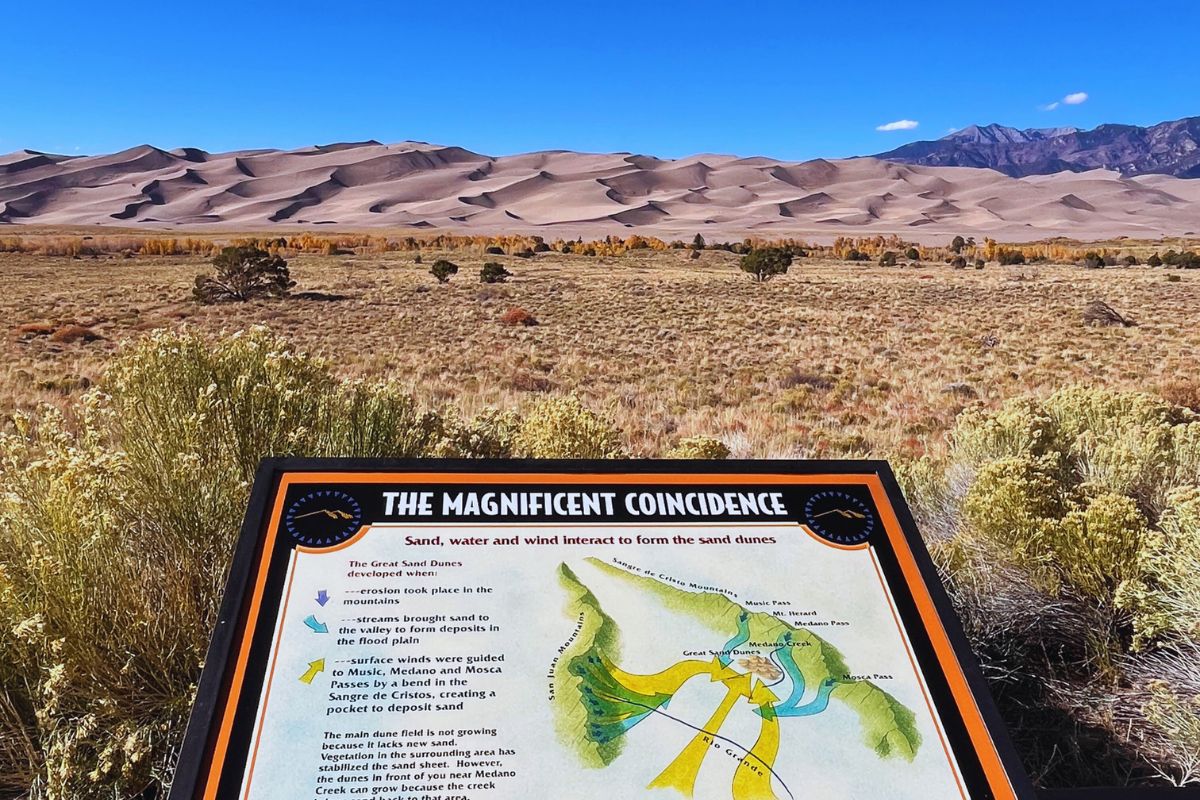
Our family has visited dozens of national parks over the years, and one thing we have come to expect is the “wow” moment upon first entering a park. Whether it’s seeing the brilliant blue water at Crater Lake or coming around a bend in the road as a gigantic sandstone arch comes into view at Arches National Park, there is always something that takes our breath away. So when we got close to Colorado’s Great Sand Dunes Park & Preserve, we were shocked to realize that the giant brown mounds we saw leaning against the base of the mountains were actually the dunes, one measuring as high as 750 feet from base to the top! Here’s why we think it’s a special place to visit, and tips to help you plan your trip.
Where is Great Sand Dunes National Park & Preserve?
Located in Southern Colorado in the Sangre de Cristo Mountains, we visited the park as part of a road trip from Albuquerque to Denver. It’s about 3 hours north of Santa Fe, New Mexico, 4 hours from Albuquerque, or 4 hours from Denver. Depending on the time of year, come prepared with food and drink, as not much may be open in the area.
Activities at the Park
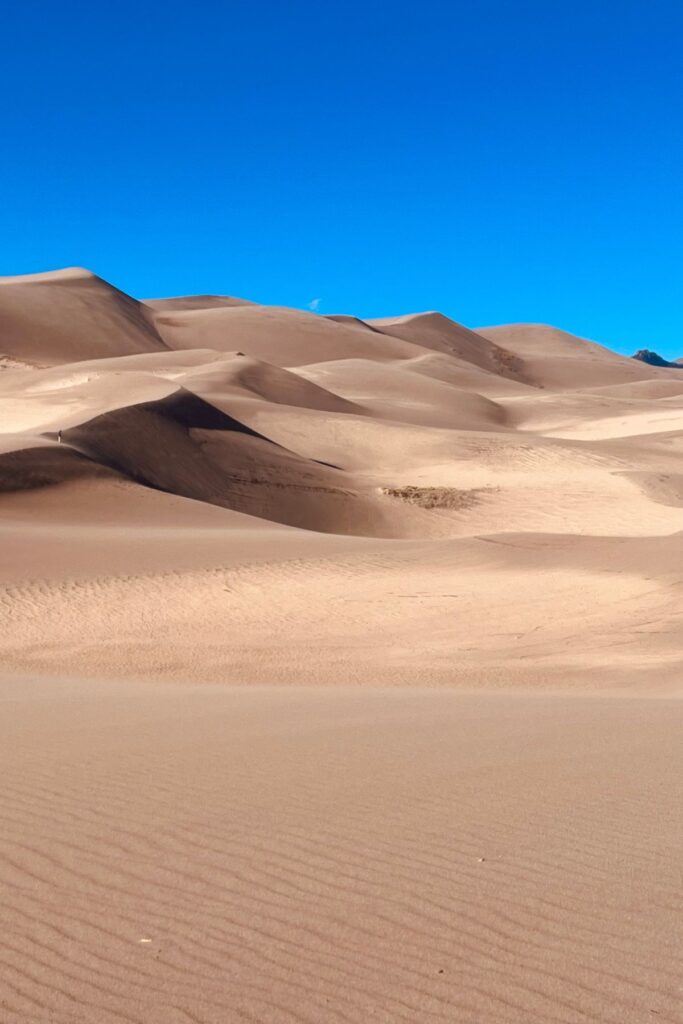
The main attraction at Great Sand Dunes National Park & Preserve is, of course, the expansive dune field. You heard the phrase “2 steps forward & 1 step back? Expect a lot of that as you make your way up the ridges, stopping to take in the impressive views along the way.
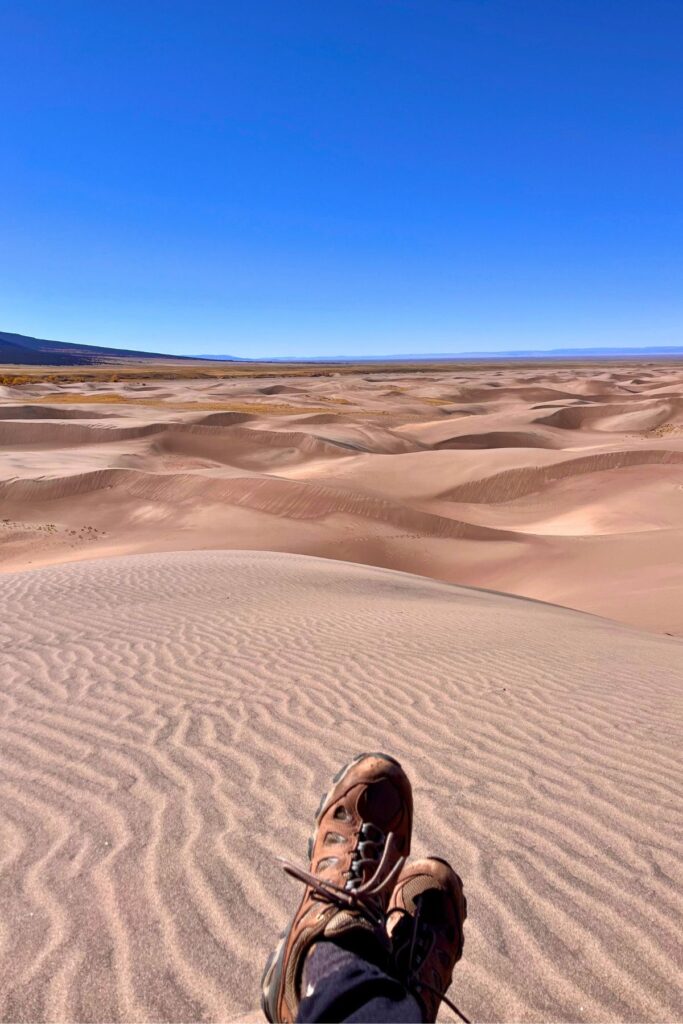
Plan to rent a board if you think you want to try sandboarding or sledding. We noticed that most of the riders were sitting versus snowboard style. Since there are no marked trails on the dunes, you can essentially sandboard from any point along the way, but you probably need to walk at least half a mile to reach even a small peak. During our visit, we saw folks sledding from the largest dunes at the top and from the smaller dunes that don’t require much walking.
We decided against renting a board for the next morning, given the wind that we encountered in the late afternoon the previous day. Several locations nearby offer rentals, so do your research in advance to be prepared. You might think you can get away with using cardboard or a snow sled, but you really need the rental equipment for the optimal experience. Many riders were dragging their hands to steer/slow down, and all recommended a mouth covering or neck gator to keep the sand out.
As far as driving around the park, with just four miles of paved roads, most visitors will find it easy to get around. Unpaved and primitive roads in the park require 4WD vehicles with high-clearance or you can access through a seasonal guided tour. It’s a short drive to reach the trailhead and small parking area for the Montville Nature Trail and Mosca Pass Trail. The nature trail goes through a forested area for about a half mile, with remnants of a settlement from the 1800s along the way. We cut over to the campground trail for a more expansive view of the dunes and mountains, including spots of colorful yellow foliage in mid-October.
It’s worth spending the night if you can, because when the sun goes down, you will want to head outside to view the brilliant night sky! Great Sand Dunes National Park & Preserve is one of dozens of National Park units designated as an International Dark Sky Park. Despite my complaints about the downright cold temperatures during our visit in October, the nighttime sky was dazzling with views of stars, constellations, and the Milky Way. The use of a red light is suggested as you wind your way from the parking lot to the base of the dunes to keep light pollution at a minimum. Night ranger programs are offered seasonally during the summer months.
And while you are in the area, check out Zapata Falls Recreation Area. It’s a steep, 3-mile drive to get to the trailhead parking; from there hike about a half mile to get to the water. To view the actual falls requires a trek over slippery rocks and into a cave, but many visitors, us included, just hike to the edge of the rushing water.
Best Time to Visit
With a visitor center at 8,200 feet elevation, summer air temperatures are moderate. However, the sand dunes, which serve as the centerpiece of the park, can reach unbearable temperatures on a summer afternoon, when it is strongly recommended to only walk on the dunes in the early morning or evening. Visitors flock to the park during May and June when the waters of Medano Creek fill the flat area at the bottom of the sand dunes. It’s one of the cool features that draws visitors to the “beach.” By late summer, afternoon thunderstorms become more common, so pay attention to the weather forecast and plan activities for earlier in the day.
Other popular times are late spring and early fall. Our mid-October visit was filled with clear skies and mild temperatures during the day, with cold nights for stargazing. We were greeted with strong winds on the sand dunes in the late afternoon, but much milder conditions the next day around 10:30 am. There was still golden color from the Aspen and Cottonwood trees, even though it was past the typical peak color found in late September/early October. Snow could come as early as November and last through the winter months into April.
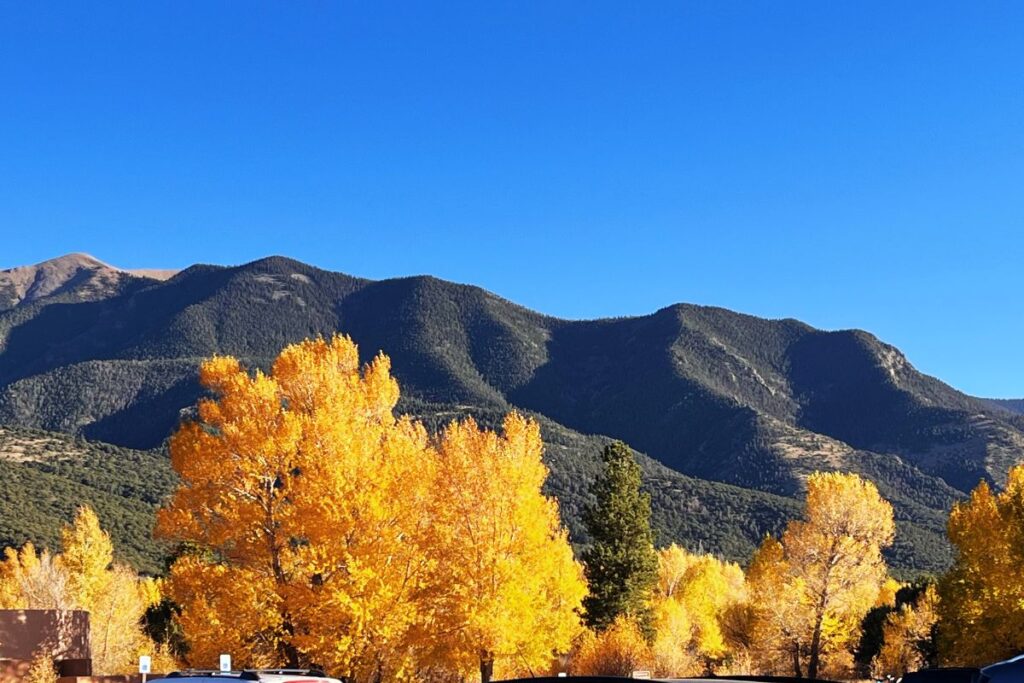
Still not sure when to visit Great Sand Dunes? The park website offers a detailed guide describing what to expect each month.
Where to Stay & Eat When Visiting Great Sand Dunes Park & Preserve
You can’t beat the convenience of Great Sand Dunes Lodge, just a 10-minute drive from the park visitor center. This basic lodge offers a view of the dunes from your back patio. It’s open seasonally, with a grab-and-go breakfast and the option to rent sandboards for sledding. The Great Sand Dunes Oasis Restaurant was closed when we visited in October. Within a 30-40 minute drive of the park, you can find hotels in Alamosa and Fort Garland.
In Alamosa, try Emma’s Authentic Food of the Southwest for lunch on your way to or from the park. Once you get into the park, food options are limited, so plan accordingly. Alamosa is home to several grocery stores, which made it convenient for us to stock up on snacks, fruit, a loaf of bread, and some peanut butter!
Planning Tips & Things to Know Before You Go
*No reservations are required for the park.
*We always suggest a stop in the Visitor Center and a chat with the park rangers before heading out. It’s a great place to learn more about the park and how the sand dunes came to be.
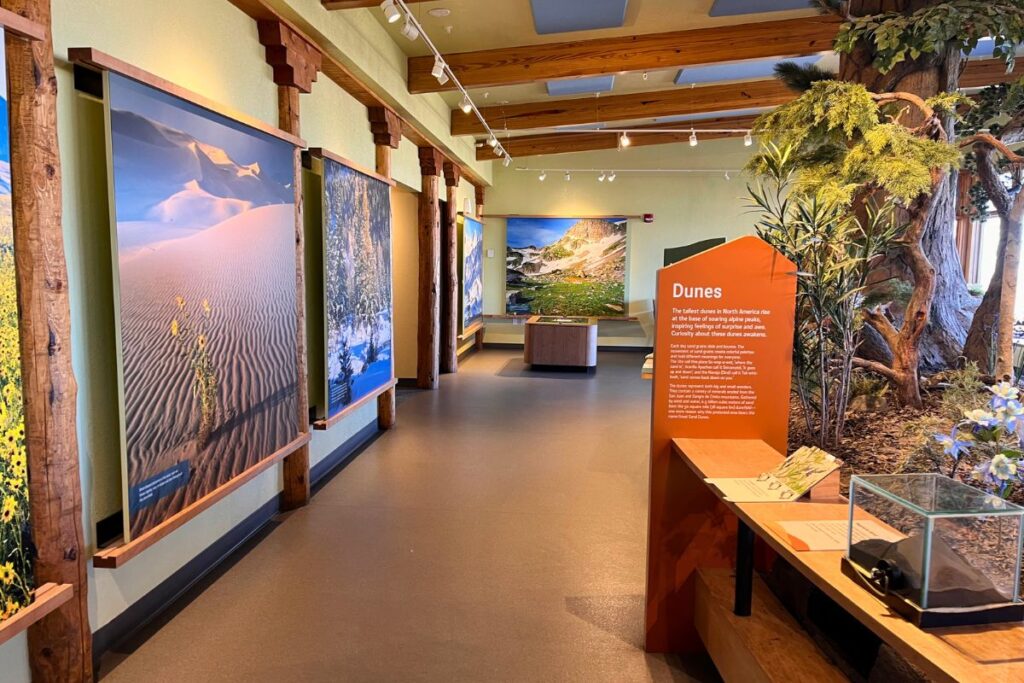
*During the summer months, plan to get an early morning start to avoid the heat of the sand.
*The park has about 4 miles of paved roads; other roads such as the Medano Pass Primitive Road can only be explored with 4WD vehicles with high-clearance or on a guided tour
*Keep in mind that cell service may be spotty. We always recommend using the National Park Service app and saving the park information for offline use before heading out. I also screenshot important information like trail maps ahead of time.